A low pack price and a polished certificate do not prove that a supplement suits your herd, complies with the destination market, or remains stable during delivery. By the end, you will have a practical process for defining the farm need, checking supplier evidence, running a controlled trial, calculating the real cost, and approving or rejecting the source.
Key takeaways
- Define the herd problem using records, symptoms, feed analysis, and veterinary findings.
- Ask for the supplier’s licence, batch documents, test results, and manufacturing-control evidence.
- Compare active ingredients, dose per cow, trial conditions, and cost per treated day.
- Quarantine deliveries until seals, labels, batch numbers, and certificates match the order.
Define the herd problem before contacting suppliers
A diagnosed herd problem should determine both the supplement you investigate and the dairy cattle feed supplement supplier you shortlist. Record the evidence before requesting quotations; otherwise a broad claim such as “supports performance” can hide the real cause.
- Analyse forage and concentrate for dry matter, protein, fibre, minerals, and mycotoxins.
- Record dry-matter intake, milk yield, milk-fat and milk-protein percentages, body-condition score, rumination, and faecal consistency.
- Ask your veterinarian to exclude disease before treating low production, loose manure, poor fertility, or a rising somatic-cell count with a supplement.
- Define the endpoint: milk-fat yield, milk-protein yield, intake, somatic-cell count, or fewer cases of a named disorder.
- Reject evidence from an aquaculture probiotics feed additive supplier as proof for cattle; fish and shrimp require separate species, life-stage, pathogen, water-quality, and environmental assessments.
Use the same evidence to test supplier suitability:
| Criterion | Evidence to request | Why it matters |
|---|---|---|
| Batch uniformity | Finished-feed or premix assay, mixing data, and particle-segregation controls | Poor flowability, density differences, moisture, or static can underdose some cows and overdose others |
| Traceability | Raw-material-to-lot records, complaint owner, withdrawal plan, and recall contacts | You need to identify affected farms and remove stock quickly |
| Market compliance | Destination-market feed controls; for the United States, 21 CFR Part 507 records and preventive controls | Human-drug GMP alone does not prove animal-feed compliance |
| Delivery condition | Temperature and humidity limits, excursion records, shelf-life commitment, and lot traceability | Heat damage or short remaining shelf life makes compliant stock unusable |
Verify the supplier’s legal status and manufacturing controls
A manufacturing licence and product licence must cover the destination market, the actual site, and the feed category. For the United States, confirm controls under 21 CFR Part 507, including hazard analysis, preventive controls, sanitation, supply-chain controls, and records. Human-pharmaceutical GMP does not replace feed compliance.
Request these documents before approving a dairy cattle feed supplements supplier:
- Current manufacturing and product licences, showing permitted species, ingredients, claims, and site address
- FAMI-QS or GMP+ certificate, with scope, expiry, audit findings, and suspension status verified with the certification body
- Ingredient specifications proving identity, species-specific safety, permitted use, and controls for animal-derived materials
- A recent batch record and Certificate of Analysis showing assay, dose uniformity, microbiological limits, moisture where relevant, heavy metals where relevant, batch number, dates, storage conditions, and authorised signatory
- Written deviation, complaint, withdrawal, and recall procedures
| Evidence | Check | What it proves |
|---|---|---|
| Batch record | Raw-material lots, processing steps, in-process checks, release approval | Traceability and repeatable manufacture |
| Uniformity result | Finished premix or feed assay across samples | Segregation, poor flow, or static has not caused uneven dosing |
| Stability record | Container, temperature, moisture, and expiry basis | The stated shelf life is controlled |
| Recall procedure | Lot identification, distributor contacts, response owner | Affected stock can be withdrawn quickly |
A human-pharma quality system strengthens documentation and data integrity, but verify feed-specific carryover controls and active-ingredient legality separately. Ask who investigates adverse events and who can trace every affected lot.
Check the formula, dose, and trial design against the farm
A formula that looks right on paper can fail in the mixer, trough, or cow. Match the active ingredients and inclusion rate to the forage and concentrate analysis, dry-matter intake, parity, days in milk, body-condition score, and production stage; evidence from fish, shrimp, or another species does not establish suitability for dairy cattle.
Ask the supplier to provide these farm-specific answers:
- What active ingredient reaches each cow per day at the proposed inclusion rate, and how does that dose fit the ration’s existing minerals, protein, buffers, yeast, or medications?
- What finished-feed or premix testing demonstrates dose uniformity across a batch, including checks for segregation, poor flowability, moisture absorption, or electrostatic separation?
- Which target outcome is supported by dairy-cattle evidence: dry-matter intake, milk yield, milk-fat or milk-protein yield, somatic-cell count, fecal score, or a named disorder?
- What contraindications, withdrawal requirements, palatability risks, and storage limits apply to this herd and production stage?
Set the trial before ordering. Define parity, days in milk, ration, baseline production, disease-exclusion criteria, animal numbers, duration, control group, and measurement method. Record dry-matter intake, milk yield and components, body-condition score, rumination, fecal consistency, and adverse events against the predefined endpoint. A claim such as “supports performance” is not a result.
Put the approved formula, dose, target animals, test methods, and change-notification requirement in the quality agreement. Require advance notice of changes to strain, formulation, raw-material source, manufacturing site, process, analytical method, packaging, or shelf life.
Compare delivered cost, logistics, and technical support
A low pack price is not a low feeding cost. Compare the price per cow per day at the stated dose, then add freight, taxes, minimum order quantity, delivery charges, wastage, and the cost of stock that expires before use.
| Measure | Supplier A | Supplier B |
|---|---|---|
| Delivered cost per cow per day | Pack price plus freight, divided by usable doses | Pack price plus freight, divided by usable doses |
| Shelf life on arrival | Minimum remaining months agreed in writing | Minimum remaining months agreed in writing |
| Logistics control | Temperature, humidity, data logger, excursion procedure | Temperature, humidity, data logger, excursion procedure |
| Technical service | Trial design, ration review, complaint owner, withdrawal contact | Trial design, ration review, complaint owner, withdrawal contact |
Put temperature and humidity limits, packaging requirements, lot traceability through the distributor, and excursion reporting in the purchase terms. A product that meets its release specification but arrives heat-damaged, wet, unsealed, or close to expiry is not a dependable feed input.
Ask Alvid Groups or any shortlisted supplier for post-processing stability data when the supplement contains probiotics. The evidence must cover your conditioning temperature, residence time, moisture, cooling, packaging, and storage—not only an unopened concentrate.
Treat an aquaculture probiotics feed additive supplier as a separate qualification. Fish or shrimp evidence does not prove cattle efficacy; check target species, life stage, water-quality effects, pathogen exclusion, environmental release, feed stability, and the production country’s authorization rules.
In the EU, confirm whether the product is a feed material, complementary feed, or feed additive authorized under Regulation (EC) No 1831/2003.
Related products
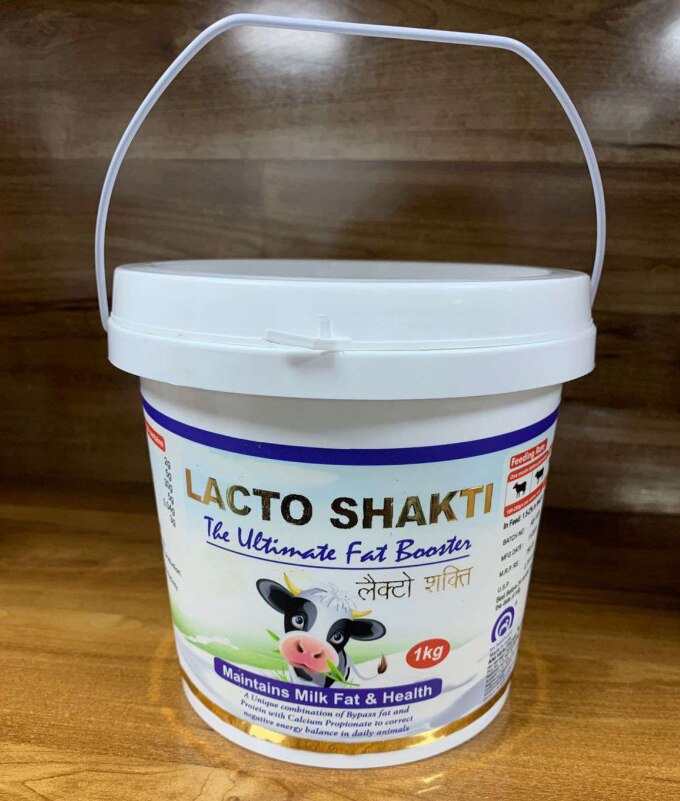 | Veterinary Division Lacto Shakti is a veterinary nutritional supplement designed as a fat booster and milk yield enhancer for dairy animals like cows and buffaloes. View product → |
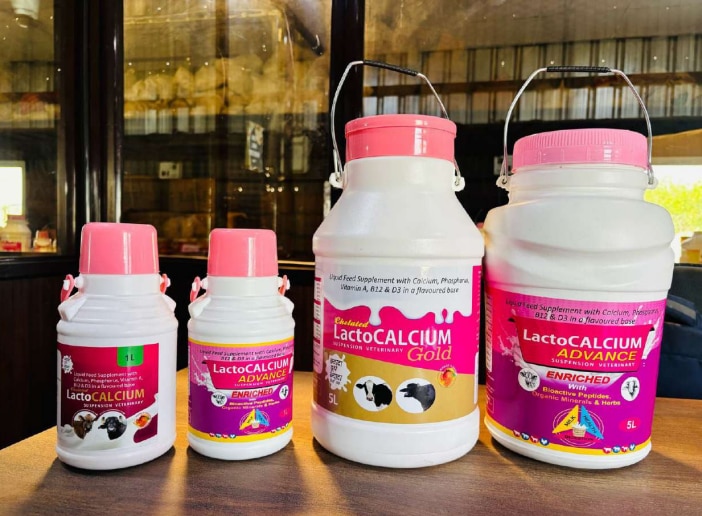 | Veterinary Division The image features the Lacto Calcium line of veterinary liquid feed supplements, produced by ANI Healthcare. View product → |
Authenticate every delivery and make the approval decision
At receipt, place the consignment on hold until the physical pack, paperwork, and transport conditions agree. Record the delivery date, vehicle or distributor, quantity, and lot numbers before unloading it into feed storage.
- Inspect sacks, tubs, or drums for tears, punctures, water marks, swelling, broken seals, pests, caking, unusual odour, or illegible labels.
- Match the product name, lot number, manufacturing date, expiry date, net weight, storage instruction, and label dose to the purchase order.
- Check the Certificate of Analysis for active-ingredient assay, moisture where relevant, microbiological limits, heavy metals where relevant, and an authorised signatory.
- Confirm the minimum remaining shelf life and review temperature or humidity records when the product requires controlled transport.
- Trace every lot through the distributor and retain photographs, delivery records, and a representative sample.
A CoA releases that batch; it does not prove supply-chain control. Do not approve stock merely because the CoA is present.
- Quarantine it when documents are missing, seals are damaged, conditions are unknown, or identity, quantity, or lot details do not match.
- Return it when packaging is compromised, the product is heat- or moisture-damaged, shelf life is inadequate, or testing confirms nonconformance.
- Reject the supplier after falsified records, unexplained lot changes, repeated delivery failures, unresolved complaints, or failed corrective actions.
- Approve the lot only when inspection, records, transport evidence, and any required testing meet your written acceptance limits.
Frequently asked questions
What should you identify before contacting a dairy cattle feed supplement supplier?
Record the herd problem, affected animals, symptoms, production changes, feed analysis, ration details, and veterinary findings before requesting quotations.
How can you verify a supplement supplier’s legal status and manufacturing controls?
Request the applicable manufacturing licence, company details, batch-release documents, certificates of analysis, and evidence of controls for identity, contamination, storage, and traceability.
What should you compare in dairy cattle feed supplements?
Compare the active ingredients, concentration, inclusion rate, dose per cow, directions, contraindications, shelf life, packaging, and evidence from a trial that matches your herd.
How do you compare the real cost of feed supplements?
Calculate cost per cow per day and per treated herd, then add freight, minimum order quantities, storage, wastage, testing, and the labour required to administer the product.
What should you check when a supplement delivery arrives?
Check the product name, batch number, manufacture and expiry dates, seal, pack condition, storage history, label directions, and certificate of analysis before release to the herd.
Related products
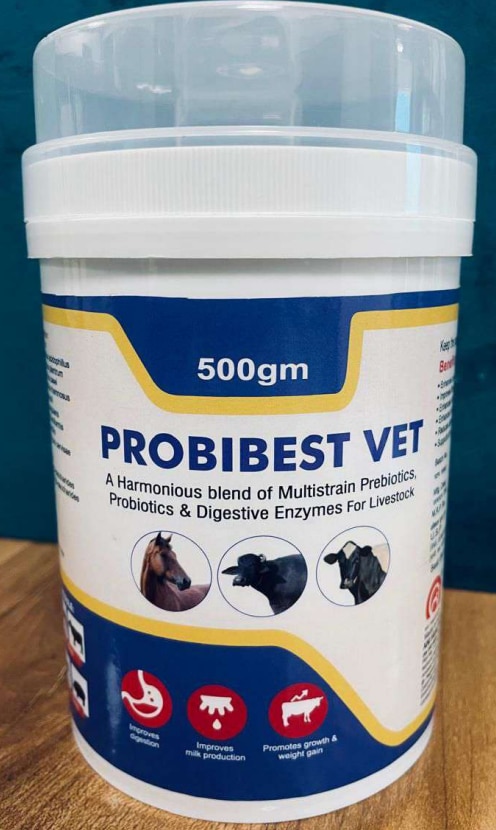 | Veterinary Division PROBIBEST VET is a veterinary nutritional supplement for livestock, including horses, buffaloes, and cattle. View product → |
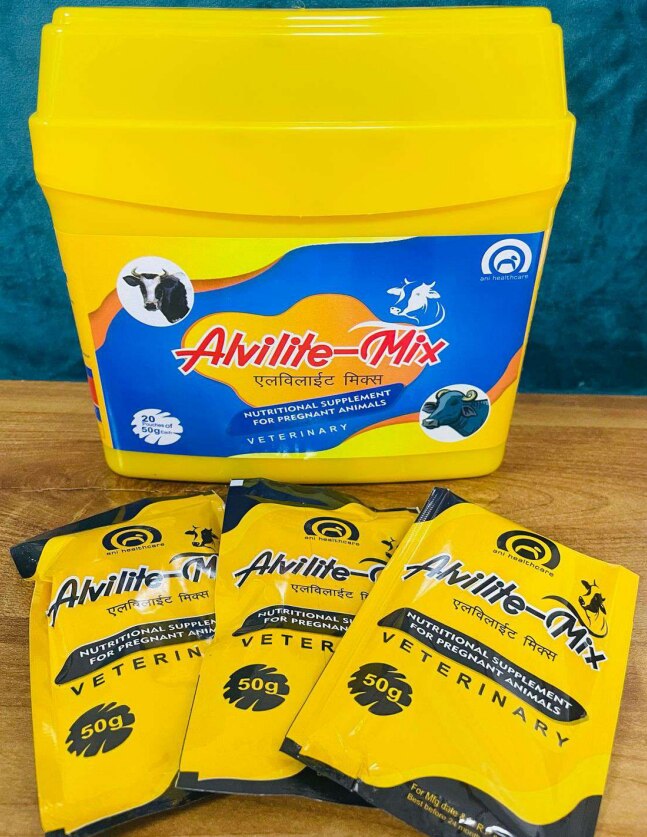 | Veterinary Division Based on the image provided, Alvilite-Mix is a specialized veterinary nutritional supplement produced by ANI Healthcare for pregnant cattle and... View product → |
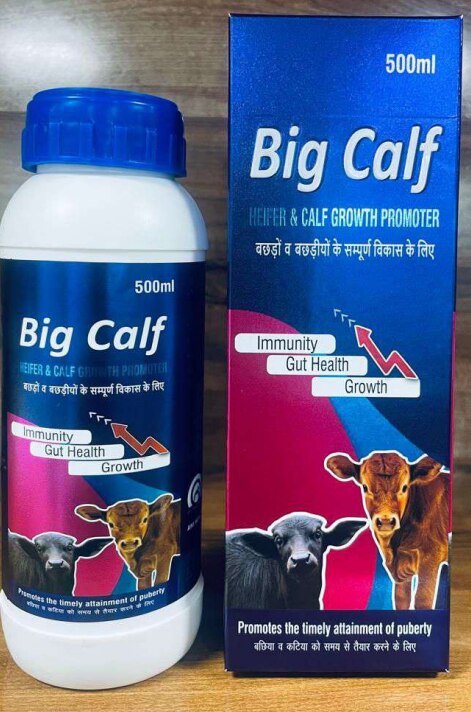 | Veterinary Division Key Benefits and Features Immunity & Health: It acts as a powerful immunity booster to protect newborn and growing calves from common diseases and... View product → |
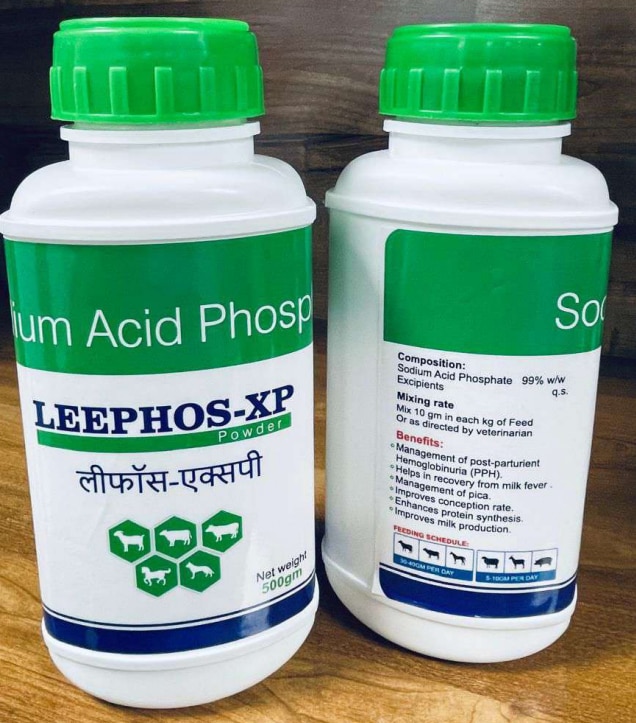 | Veterinary Division LEEPHOS-XP is a high-potency veterinary feed supplement designed to manage metabolic disorders and enhance productivity in livestock like cattle,... View product → |
Keywords